Effects of Structured Aerobic Exercise on Cardiorespiratory Fitness and Flexibility in Male University Students
DOI:
https://doi.org/10.60081/SSHA.4.1.2026.579-586Keywords:
- aerobic training,
- health-related physical fitness components,
- cardiorespiratory,
- flexibility
Abstract
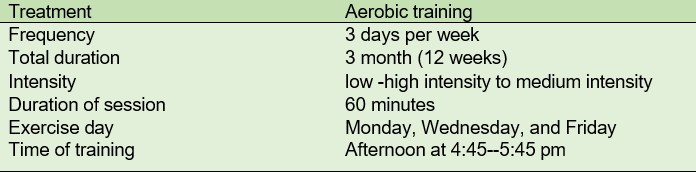
Purpose: This study examined the effect of 12-week aerobic training program on selected health-related physical fitness variables, specifically cardiorespiratory endurance and flexibility, among male college students. Material and Methods: A total of 30 male students aged 20–25 years were randomly selected and assigned into two groups: an experimental group (EG, n = 15) and a control group (CG, n = 15). The experimental group participated in a structured aerobic training program three times per week for 12 weeks, with each session lasting 60 minutes at moderate intensity, including warm-up, main exercise, and cool-down phases. The control group continued their usual physical activities without intervention. Data were analyzed using IBM SPSS Statistics Version 20. Descriptive statistics were used to summarize pre- and post-test scores, while the Shapiro–Wilk test confirmed normal distribution of the data. A paired-samples t-test was employed to examine differences between pre- and post-test performances, with the level of significance set at p ≤ 0.05. Results: The findings revealed that aerobic training produced a statistically significant improvement in the experimental group’s cardiorespiratory endurance and flexibility. Cardiorespiratory endurance improved markedly from a pre-test mean of approximately 1993.53 meters to a post-test mean of 2800.00 meters, while flexibility also showed significant enhancement (p = .00). In contrast, the control group showed no statistically significant improvement in either cardiorespiratory endurance or flexibility. Conclusion: The research findings highlighted regular aerobic training has a substantial positive effect on improving health-related physical fitness among male college students. Therefore, aerobic exercise can be recommended as an effective strategy for enhancing students’ cardiovascular endurance and flexibility.

Downloads
References
Aloko, E. A., Seibu, M., Apaak, D., Sarpong, E. O., Sorkpor, S. R., & Ansah, E. W. (2023). Body Weight and Cardio-respiratory Fitness: Predictors of Physical Function Capacity among Older Adults. medRxiv, 2023-06.
Arfanda, P. E., Wiriawan, O., Setijono, H., Kusnanik, N. W., Muhammad, H. N., Puspodari, P., ... & Arimbi, A. (2022). The effect of low-impact aerobic dance exercise video on cardiovascular endurance, flexibility, and concentration in females with sedentary lifestyle. Physical Education Theory and Methodology, 22(3), 303-308.
Armstrong, N. and A.M. McManus, 2010. Physiology of elite young male athletes. Med Sport Sci., 56:1–22.
Ayangeakaa, A. (2025). The Impact of the Lifetime Fitness Program on College Students' Fitness Profiles (Master's thesis, The University of North Carolina at Chapel Hill).
Balogun, J. A. (2026). Healing Hands: A Comprehensive History of Physical Therapy. In Contemporary and Global Perspectives in Physical Therapy (pp. 2119-2150). Cham: Springer Nature Switzerland.
Bushman, B. A. (2020). Exercise for prevention of chronic diseases. ACSM's Health & Fitness Journal, 24(1), 5-10.
DAYANANDA, M. (2024). The Benefits of Aerobic Training Exercises For Improving The Quality of Life. Special Issue on, 90.
El-Ashker, S., & Al-Hariri, M. (2023). The effect of moderate-intensity exercises on physical fitness, adiposity, and cardiovascular risk factors in Saudi males university students. Journal of Medicine and Life, 16(5), 675.
Franklin, B. A., Eijsvogels, T. M., Pandey, A., Quindry, J., & Toth, P. P. (2022). Physical activity, cardiorespiratory fitness, and cardiovascular health: A clinical practice statement of the ASPC Part I: Bioenergetics, contemporary physical activity recommendations, benefits, risks, extreme exercise regimens, potential maladaptations. American journal of preventive cardiology, 12, 100424.
Hosiso, M., Rani, S., & Rekoninne, S. (2013). Effects of aerobic exercise on improving health related physical fitness components of Dilla University sedentary female community. International Journal of Scientific and Research Publications, 3(12), 1
KIPCHIRCHIR, T. A. (2025). Effects of an Eight-Week Aerobics Programme on the Health-Related Components of Fitness of Kenyan Female University Students (Doctoral dissertation, Kenyatta University).
Kruk, J. (2007). Physical activity in the prevention of the most frequent chronic diseases: an analysis of the recent evidence. Asian Pacific Journal of Cancer Prevention, 8(3), 325.
Lan, C., Liu, Y., & Wang, Y. (2022). Effects of different exercise programs on cardiorespiratory fitness and body composition in college students. Journal of Exercise Science & Fitness, 20(1), 62-69.
Linker B. War's waste: Rehabilitation in World War I America. Chicago, IL: University of Chicago Press; 2011.
Liu, A. (2023). Effect of aerobic training on physical fitness and cardiopulmonary resistance of university students. Revista Brasileira de Medicina do Esporte, 29, e2023_0021.
Nagappa, K. T., & Martin, K. P. (2019). Effects of aerobic exercises, and meditation on endurance variable of school children.
Nassis, G. P., Papantakou, K., Skenderi, K., Triandafillopoulou, M., Kavouras, S. A., Yannakoulia, M., & Sidossis, L. S. (2005). Aerobic exercise training improves insulin sensitivity without changes in body weight, body fat, adiponectin, and inflammatory markers in overweight and obese girls. Metabolism, 54(11), 1472-1479.
Nuzzo, J. L. (2020). The case for retiring flexibility as a major component of physical fitness. Sports Medicine, 50(5), 853-870.
Osipov, A., Ratmanskaya, T., Nagovitsyn, R., Zhuikova, S., & Iermakov, S. (2020). Increasing the level of cardiorespiratory and strength endurance of female students by means of mixed training (Kangoo-jumps fitness and resistance training). Physical Activity Review, 2(8), 38-47.
Park, W., Jung, W. S., Hong, K., Kim, Y. Y., Kim, S. W., & Park, H. Y. (2020). Effects of moderate combined resistance-and aerobic-exercise for 12 weeks on body composition, cardiometabolic risk factors, blood pressure, arterial stiffness, and physical functions, among obese older men: a pilot study. International journal of environmental research and public health, 17(19), 7233.
Probart, C. K., Notelovitz, M., Martin, D., Khan, F. Y., & Fields, C. (1991). The effect of moderate aerobic exercise on physical fitness among women 70 years and older. Maturitas, 14(1), 49-56.
Rico-González, M., Martín-Moya, R., Giles-Girela, F. J., Ardigò, L. P., & González-Fernández, F. T. (2025). The Effects of Cardiopulmonary Fitness on Executive Functioning or Academic Performance in Students from Early Childhood to Adolescence? A Systematic Review. Journal of Functional Morphology and Kinesiology, 10(3), 254.
Salvo, D., Crochemore-Silva, I., Wendt, A., Tarp, J., Shiroma, E. J., Simpson, R. J., ... & Sallis, J. (2026). Physical activity for public health in the 21st century. Nature Medicine, 1-11.
Soriano-Maldonado, A., Morillas-de-Laguno, P., Sabio, J. M., Gavilán-Carrera, B., Rosales-Castillo, A., Montalbán-Méndez, C., ... & Vargas-Hitos, J. A. (2018). Effects of 12-week aerobic exercise on arterial stiffness, inflammation, and cardiorespiratory fitness in women with systemic LUPUS erythematosus: non-randomized controlled trial. Journal of clinical medicine, 7(12), 477.
Thompson, C. R. (2024). Prevention practice and health promotion: A health care professional’s guide to health, fitness, and wellness. Taylor & Francis.
Tian, R., & Feng, X. (2025). Comparison of the effects of different aerobics training modes on sports injury risk of college students. Molecular & Cellular Biomechanics, 22(3).
Ullah, I., Gul, R., Muhammad, A., & Usman, K. (2022). Effect of Circuit Training upon Flexibility among Non-Athletes of College Students. Al-Qanṭara, 8(2), 227-241.
Wells, K.F. & Dillon, E.K. (1952). The sit and reach. A test of back and leg flexibility. Research Quarterly, 23. 115-118.
Xu, Y., Wang, F., Yang, L., Qiao, W., Zulnaidi, H., Basar, A., & Syed Ali, S. K. (2025). The effects of Tai Chi exercise on body composition and cardiorespiratory fitness in Chinese university students with obesity: A quasi experiment study. Scientific Reports, 15(1), 20919.
Yin, H., Zhang, J., Lian, M., & Zhang, Y. (2025). A systematic review and meta-analysis of the effectiveness of high-intensity interval training for physical fitness in university students. BMC Public Health, 25(1), 1601.
Zhu, L., Yu, Q., Herold, F., Cheval, B., Dong, X., Cui, L.,& Zou, L. (2021). Brain structure, cardiorespiratory fitness, and executive control changes after a 9-week exercise intervention in young adults: a randomized controlled trial. Life, 11(4), 292.
Zhu, Q., Feng, S., & Liang, W. (2020). Influence of Aerobics Exercises on Physical Health of Obese College Students under the Background of Physical and Medical Integration. Investigación Clínica, 61(2), 837-846.
Downloads
Published
Issue
Section
License
Copyright (c) 2026 Yonas Mebrat, Tekalign Mekuria G Mariam, Tamirat Wolde Yebo, Zegeye G Yesus Gibo, Nejat Muhammed Seid

This work is licensed under a Creative Commons Attribution 4.0 International License.